

A Review of SEC Personnel Changes in the Past Six Months: Is the “New” SEC Really More Crypto-Friendly?
In the first half of 2025, the U.S. Securities and Exchange Commission experienced significant adjustments, including the replacement of several key executives, over 500 departures, and departmental restructuring.
This internal storm is quietly reshaping the regulatory landscape of the encryption market. This article will review the key changes of the SEC in the past six months and analyze whether the “new” SEC has truly opened a friendly door to cryptocurrencies.
The chairman changes three times, “frequency tuning” encryption regulatory rhythm.
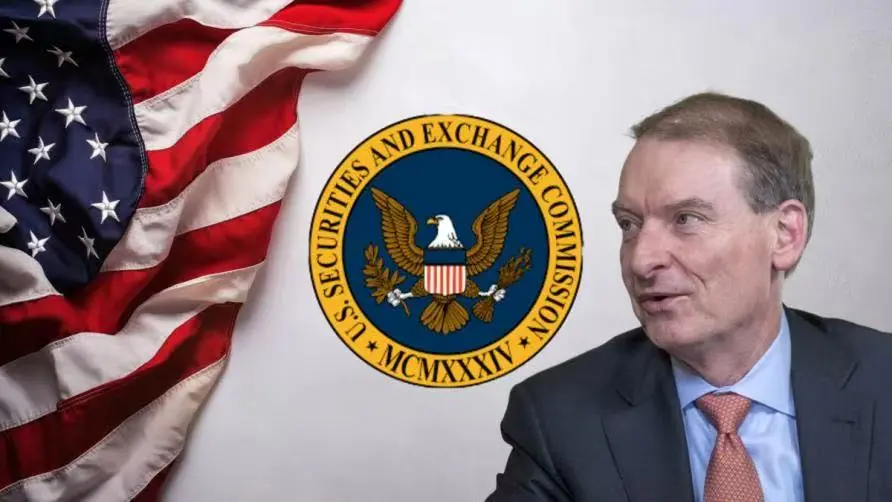
In the first half of 2025, the U.S. Securities and Exchange Commission (SEC) went through three chairmen: Gary Gensler during the Biden administration, acting chairman Mark T. Uyeda, and the current chairman Paul Atkins. Unlike Gensler, who took a hard stance and frequently initiated enforcement actions, both Uyeda and Atkins are considered to have a more friendly attitude towards the encryption industry.
Acting Chairman Mark T. Uyeda has consistently maintained an open attitude towards encryption, having cast a crucial vote in favor of a Bitcoin spot ETF. In just a few months of his acting term, Uyeda swiftly implemented the pro-encryption commitments of the Trump administration: establishing a “Cryptocurrency Special Working Group” led by Hester Peirce; rescinding the controversial SAB 121 accounting policy; and setting up the “Cyber and Emerging Technologies Unit (CETU)” to replace the old “Crypto Assets and Cyber Unit.”

In April 2025, Paul Atkins officially took over as the chairman of the SEC, further solidifying this shift in attitude. Atkins is no stranger to the encryption circle: as early as 2017, he served as the co-chairman of the Digital Chamber’s Token Alliance, actively promoting the establishment of industry standards for token issuance and trading. According to Fortune, Atkins holds approximately $6 million worth of encryption-related assets, involving shares or other investments in encryption companies such as Anchorage and Securitize.
After taking office, Atkins has repeatedly stated a crypto-friendly position. He pointed out that “the crypto market has long been trapped in the regulatory gray area of the SEC” and promised to “return to the fundamental mission of promoting rather than stifling innovation” during his term.
Core department major reshuffle
In addition to the change of the chairman, the core departments of the SEC have also undergone several key personnel adjustments. Here are the important position changes at the SEC from the beginning of the year to now:

Among the 10 executives in this transition, at least two newly appointed executives are considered to have experience in the encryption industry: Director of Investment Management Brian T. Daly and Director of Trading and Markets Jamie Selway.
Brian T. Daly was previously a partner at the international law firm Akin Gump, where digital assets, encryption, and blockchain were listed as areas of expertise in his official biography; Jamie Selway, on the other hand, was a partner at Sophron Advisors and served as the global head of institutional markets for the encryption company Blockchain from 2018 to 2019.
More importantly, the two departments they oversee are crucial within the SEC framework. The Investment Management Division is responsible for regulating investment products and services, including mutual funds, ETFs, closed-end funds, and registered investment advisers. The Trading and Markets Division controls the operational rules of market infrastructures such as exchanges, market makers, brokers, and clearinghouses. In other words, encryption ETFs and the encryption trading environment are influenced by these two departments.
At the same time, the SEC’s enforcement division, a key “power center”, has also undergone a personnel change. Gurbir Grewal, the former director of the enforcement division, who had a tough stance on encryption for a long time, left office in October 2024. During his tenure, he led several major encryption lawsuits, including those against Ripple and Coinbase. According to Cornerstone Research data, in 2024, the SEC initiated a total of 33 enforcement actions related to encryption, involving 90 defendants or respondents.
After Grewal’s departure, Sanjay Wadhwa took over as acting director, and the enforcement efforts have noticeably weakened. Between February and March of this year, the SEC dropped lawsuits against several well-known encryption companies, including Coinbase, Consensys, Robinhood, Gemini, Uniswap, and Kraken.
In addition, the SEC launched an employee “buyout program” at the end of February, offering a compensation of $50,000 to voluntarily departing employees. Ultimately, over 500 people chose to retire or leave early, accounting for about 10% of the agency’s total staff. This round of “internal downsizing” has also created space for subsequent structural reorganization and policy shifts.
Has the SEC’s “encryption rhythm” changed?
In terms of regulatory trends, the SEC is actively engaging in intensive meetings and policy statements. In the first half of this year, the SEC has held 6 roundtable discussions related to encryption, covering core topics such as regulatory frameworks, custody mechanisms, asset tokenization, and DeFi.
On the regulatory front, progress is being made. On May 30, the SEC issued a policy statement regarding staking activities in PoS networks, clearly indicating for the first time that three types of staking activities do not constitute securities issuance: these include user-initiated staking, non-custodial third-party staking, and compliant custodial staking. This provides a clearer compliance path for current encryption staking services.
At the same time, the approval of ETFs is beginning to accelerate. On June 11, the SEC issued notices to several institutions proposing to issue a Solana spot ETF, requesting them to resubmit revised S-1 documents within 7 days and promising to complete review feedback within 30 days after submission.

Personnel changes, relaxed rules, softened attitudes. This institution, which once made countless encryption projects “walk on thin ice,” is now re-engaging in dialogue with the industry.
Regulation will not disappear, but future regulation may no longer be a high-pressure net, but rather a bridge to co-construction.
Statement:
- This article is reprinted from [ChainCatcher] The copyright belongs to the original author [Fairy, ChainCatcher] If you have any objections to the reprint, please contact Gate Learn TeamThe team will process it as quickly as possible according to the relevant procedures.
- Disclaimer: The views and opinions expressed in this article are those of the author and do not constitute any investment advice.
- Other language versions of the article are translated by the Gate Learn team, unless otherwise stated.GateUnder such circumstances, it is prohibited to copy, disseminate, or plagiarize translated articles.
Related Articles

Solana Need L2s And Appchains?

The Future of Cross-Chain Bridges: Full-Chain Interoperability Becomes Inevitable, Liquidity Bridges Will Decline

Sui: How are users leveraging its speed, security, & scalability?

Navigating the Zero Knowledge Landscape

What Is Ethereum 2.0? Understanding The Merge
